OEN
The number of young people with septum piercings gradually increased with every block I walked up Flushing Avenue. Knockdown Center, the one-story brick venue in Maspeth, was hosting a 2-day, double-stage lineup of underground starlets and indie rock elders (Dinosaur Jr., Flipper, The Jesus and Mary Chain, Meat Puppets), and I bought tickets as soon as they went on sale. I mostly associated the venue with contemporary experimental music, Drain Gang concerts, and its infamously Bushwickified downstairs neighbor, Basement. This made the sight of 50-somethings in vintage band t-shirts from the 1980s very amusing, but I was just as excited as they were to take the subway out to Maspeth for the express purpose of having my eardrums rent by loud bands. Torn between which day to attend, I eventually decided on day 1 so I could catch more of the new up-and-comers I hadn’t seen before.
This was the right choice: the line went by quickly once doors opened and I was able to leisurely walk up to the courtyard stage’s barricade to watch the first act of the evening, bloodsports. Clad in 80s Sonic Youth attire (and hip Fender Jaguars and Mustangs) that most NYC post-hardcore bands sport, I was wary of the band being imitators of their heroes who I could just see later in the night. While bloodsports certainly invoke the winding, epic song structures of Drive Like Jehu and the dry dissonances of Unwound, their six-song set showed a lot of personality. The silky guitar interweavings of Sam Murphy and Jeremy Mock on a new untitled song made the dissonant breakdowns far more rewarding, and the quiet passages with bassist Liv Eriksen singing made me wonder if the band would thrive if they leaned into their melancholy and emo instincts as much as their Sonic Youth feedback thrash.
By the time bloodsports wrapped up, the crowd had doubled, and I rushed inside to see Miho Hatori on the main stage. Thus began a routine of bounding up and down the courtyard stairs to get a good spot for the next performance if a band’s last song proved unsatisfactory. For Miho Hatori, though, some people were entranced the entire time. I had seen her Cibo Matto bandmate Yuka Honda perform an ambient electronic set at my college, and they both blend sounds of nature into electronica: Hatori’s birdsong synths and cricketing drum loops made for a rainforesty atmosphere in the main room. What made Hatori’s set come to life were her vocals. Swaying behind her synths and computers, Hatori’s creeping, half-spoken lyrics would have been more ominous if the main stage wasn’t so brightly sunlit, though they worked well as a quirky texture in her soundscapes. The danceability of the DnB and slowed jungle beats broke the stiffness in the room, and I left wanting more.
No Joy and Teen Mortgage were the last of the relatively new bands on the bill. Montreal shoegazers No Joy sounded tight and lively even with pre-recorded bass and synth tracks. Surrounded by plastic inflatable flowers on the courtyard stage, their music was aptly summery. Their slower songs were ethereal: the beachy vocals and sirening leads made the body heat of the crowd a lot more tolerable. The crowd was mostly motionless for No Joy’s wah pedal pop songs, which was disappointing.
The crowd also didn’t bother to mosh for Teen Mortgage, a hardcore punk duo whose riffs felt squeezed because of the sound system. The hollowness of the drums and repetitive riffs didn’t hook me, and the crowd seemed unmoved by the lead singer’s bark. The lyrics were incomprehensible, and many of the songs blended together. They would have had a far more receptive crowd at a hardcore show, and even though Total Bummer wasn’t billed as a shoegaze festival, the energy of the crowd didn’t seem to match what the band was throwing at them.
Outside, a crowd packed around the courtyard stage for Flipper, whose longtime frontman Bruce Loose had passed 8 months ago. Pissed Jeans singer Matt Korvette sang in Loose’s stead (a position previously held by David Yow of The Jesus Lizard), and the results were disappointingly tame. Nothing has changed about Flipper’s music: the proudly boneheaded guitar parts, primal drumbeats and distorted bass were all there. Touring guitarist Jon Kelly was still flipping people off behind his back and puffing a cigarette, menacing as ever. The letdown was Korvette, who dutifully chanted the vocals instead of screaming them, lifting and waving the mic stand as his primary stage move. Kelley and drummer Steve DePace both had more attitude than Korvette. You have to match the freak of Bruce Loose if you’re going to take his place. It isn’t Flipper if the lead singer isn’t rolling on the floor and losing his mind during songs like “Ha Ha Ha” and “Sex Bomb.”
The sun was slowly going down when I ran back to the main stage to see Blond Redhead. Some people had been waiting for the entirety of Flipper’s set to get barricade spots: the New York band is known for playing very rarely as of late. When they hit the stage, the sunset had completely filled the ceiling-high windows behind them. It felt like a spiritual ceremony: the stage dimly lit with reds and blues, the band dressed in white button downs and dresses, and the crowd going completely silent during the opening pluckings of the intro. For a trio playing with no backing tracks or auxiliary musicians, Blond Redhead had songs arranged with symphonic precision: Kazu Makino’s percussive guitar ambiance during the set’s intro conversed with Simone Pace’s drums and Amedeo Pace’s skeletal guitar riffing. The intro and “Bipolar” had the spareness of a classical music performance. The band carved out space so that the subtleties and voices of every instrument shone through, and every song’s placement felt intentional. Even the sequence of Amedeo Pace’s nasal croon and Makino’s ghostly vocals from song to song showed balance. The group’s brand of dreampop is mournful and enthralling, and as night fell Makino looked like a ghost twirling onstage in her white boots and lace. The band had the strongest stage presence of any act at the festival.
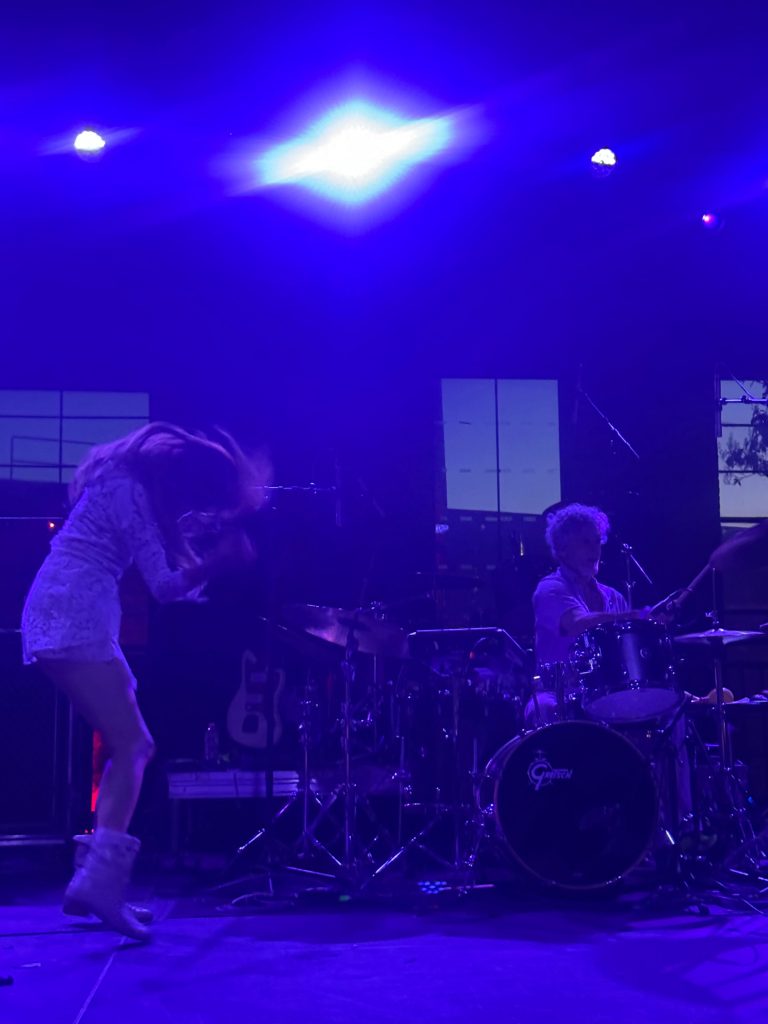
Songs like “Melody Experiment” and “Sit Down for Dinner 1” extended into trippy instrumentals that sometimes dragged, but Amedeo’s orchestral guitar texture kept most people engaged. “SW” was particularly haunting, and Amedeo’s wounded vocals against the treading drumbeat made a chill wash over the crowd. Seeing Blond Redhead felt like watching a large, wounded creature claw against its cage. The band rarely spoke to the crowd, except when Makino explained that she was having allergies and was unsure about doing an encore. The band eventually obliged, and I’m thankful they did: the fan-favorite “23” was dreamy and euphoric. It’s a shame that Blond Redhead doesn’t lean into shoegaze more: Makino’s vocals, even at their most strained, were gorgeous. “23” is a song that makes the listener numb at the legs, and I don’t remember moving my head as soon as the lush chords started. Makino’s dancing was some of the most vital dancing I’ve seen at a rock concert; each vocal run and lunge of her body felt fluid. Blond Redhead’s time ran over, and the chords of the Meat Puppets’ first song were audible from outside. The crowd didn’t move.
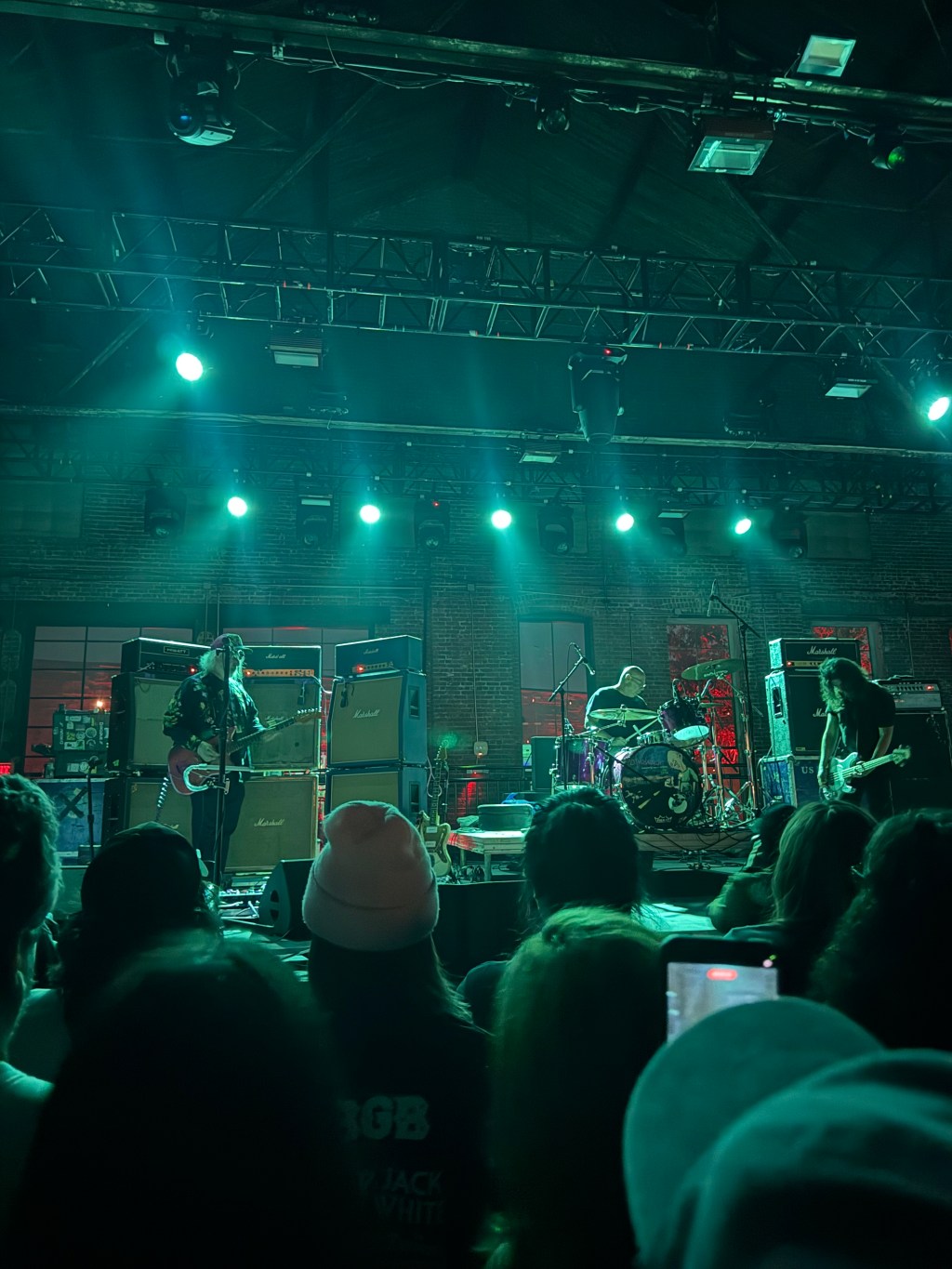
I caught a glimpse of the Meat Puppets, the oldest band on the bill apart from Flipper. The crowd covered the entire courtyard and stairwell to the main stage. As excited as I was to see them after listening to Up on the Sun, the Kirkwood brothers’ voices were shot. As tight as the band sounded, I didn’t stay for more than one song. When I returned to the main stage, the three stacks of amplifiers that had been looming on the side of the stage were being wheeled forward. Some concertgoers clung to the barricade for almost two hours after Blond Redhead, waiting for Dinosaur Jr. to begin their headlining set.
The Amherst rock institution has been around long enough and toured often enough that their headlining appearances at indie rock festivals feel like canon events (I had seen them once before at my first post-pandemic concert, and they had played Celebrate Brooklyn last year). J Mascis and company might as well be The Rolling Stones of 80s indie rock, with setlists that read like greatest hits compilations and fans that still show up despite the band’s last album coming out five years ago. Lou Barlow plugged in, Murph climbed the drum riser, and in usual stoic fashion, Mascis stepped between his tower of amps and the mic stand craning over his massive pedalboard. The crowd’s screams went unacknowledged until the band swiftly ripped into “The Lung,” drowning out the crowd in fuzz. The first of several songs from You’re Living All Over Me that night, “The Lung” sounded heavy and lumbering, but I had expected the band to be louder. My worries that this would be a quiet set for Dinosaur were silenced when the band started the muddy riffage of “In a Jar.” J Mascis steps on his fuzz pedal the way a kid calmly squashes a bug, and the solo on “In a Jar” had the alien buzz of the bug being squashed. The crowd nodded accordingly to the massive boost in volume. Ah, there they are.
The band lost a bit of momentum during “Garden,” a relatively new song sung by Lou Barlow. As is tradition for most Lou Barlow tunes, he and Mascis swapped bass and guitar duties. Barlow’s warm voice has held up well, but the band feels slightly out of their element when Mascis is forced to play bass; he did whip out a charmingly over-the-top bass solo towards the end of the song though. The following run of songs, however, was immaculate. The band chugged through “Kracked” and “Sludgefeast,” with Barlow’s rumbling bass and Murph’s thunderous drums spurring the first moshpit of the set. Mascis’ twangy vocals on “Out There” and “Feel the Pain” were infectious as ever, but any attempts to sing along to the choruses proved futile against the wall of distortion blasting off the stage. J Mascis’s guitar solos are truly alien, and he was selective with the songs he improvised on. The combination of overpowering volume and tremolo made him fall out of time with the drums, and Murph would sometimes awkwardly correct himself to accommodate Mascis. This problem only became noticeable on the thunderously loud “Little Fury Things” where the bass and drums were almost inaudible at some points.
The band’s heavier, more guitar-forward cuts like “Mountain Man” showcased Mascis’s metal shredding and heavy riffage, but the crowd seemed far more engaged by the prettier stylings of “Start Choppin’” and their now-immortal cover of “Just Like Heaven.” Even when the band fell out of time with each other, the whirlwind of fuzz and Mascis’ gorgeous leads enraptured the audience. The band’s closing run of “Freak Scene” and “Gargoyle” ended in an extended guitar solo that went on for five minutes too long: the band seemed exhausted, and the mosh pit was burned out by wave after wave of phaser-soaked riffage. At one point, I just saw people bumping into each other to the high whine of guitar feedback. Despite the set’s burnout ending, Dinosaur Jr. had delivered the goods, and proved that if you have a cache of brilliantly written songs, your set can be as sloppy as you want.
Total Bummer Day 1 felt extremely satisfying, and I was happy that I got a sampling of all the bands that played. Walking out of the warehouse doors, I bumped into dozens of old friends from high school, college, and sleepaway camp tentmates of ye olde who had come to see different performers. It was wholesome seeing the mix of scene veterans who probably saw Dinosaur Jr. and Flipper in the 80s alongside the swath of college students. It was well worth the trek in the late Spring heat, and I’d pay to go to a second incarnation of the festival next year.


Leave a comment